Table of Contents
TogglePrenatal Pilates classes are low-impact Pilates sessions adapted for pregnancy, with an instructor adjusting exercises, positions and intensity as your body changes. Many women use them to keep up gentle strength work, core and pelvic floor awareness, and mobility, but whether they suit you depends on your pregnancy, so always get clearance from your doctor, obstetrician or midwife first. Pilates360 offers pre and post natal Pilates on Sydney’s Lower North Shore, at its St Leonards and Neutral Bay studios, and has been helping people move well since 2015. This guide covers the benefits, how to stay safe, what a class involves and how to get started.
What Are Prenatal Pilates Classes?
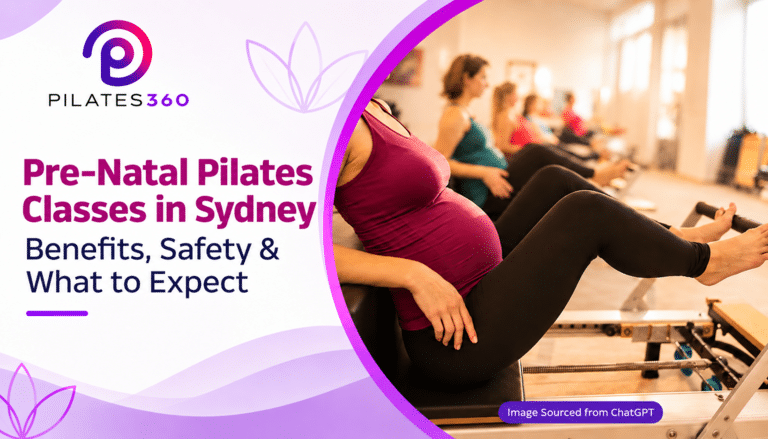
A prenatal Pilates class is a Pilates class designed for pregnant women. The core principles are the same as in any Pilates class: controlled movement, breathing and alignment. The difference is in the adjustments. An instructor trained in pre and post natal Pilates changes positions, avoids movements that are not suitable as pregnancy progresses, and focuses on supportive, comfortable work rather than intensity.
Classes are usually small group sessions, and one-on-one private sessions are also an option if you want more individual attention. The studio’s FAQ page states that its instructors are pre and post natal trained.
Benefits of Prenatal Pilates
Results vary from woman to woman, and prenatal Pilates is a supportive form of exercise, not a treatment. Commonly mentioned benefits include:
- Core and pelvic floor awareness. Pilates places a lot of attention on breathing and deep core control, which many women find helpful for understanding how these muscles work.
- Posture. Strengthening the back and postural muscles may help you stand and move comfortably as your body changes.
- Strength. Gentle resistance work builds strength in the legs, hips, arms and back.
- Mobility. Controlled movement keeps joints moving, without pushing into extreme stretches.
- Breathing and relaxation. Many women enjoy the slower pace and focus on breath.
- Community. A class of other pregnant women can be a welcome source of support.
National guidelines also support this kind of activity. The Australian Government’s guidelines for physical activity during pregnancy encourage being active on most days, doing muscle-strengthening activities on at least two days a week, and doing pelvic floor exercises, and Pilates can be one way to include strengthening work.
Is Prenatal Pilates Safe?
For many women with an uncomplicated pregnancy, gentle exercise such as Pilates is considered suitable, but only your own health professional can confirm that for you. Use this checklist before you start:
- Get clearance first. Speak with your doctor, obstetrician or midwife before starting or continuing, especially in early pregnancy or if you have any complications. The national guidelines advise seeking professional advice first if there are complications.
- Tell your instructor everything. Share how many weeks pregnant you are, your health history and any symptoms.
- Avoid overheating and stay hydrated. Drink water and stop if you feel too hot.
- Expect position changes. As pregnancy progresses, instructors commonly adjust exercises that involve lying flat on your back, and avoid jumping or high-impact movement.
- Know when to stop. Common reasons to stop and seek medical advice include dizziness, pain, bleeding, fluid leaking, regular contractions, shortness of breath or reduced baby movements. Ask your doctor for your own list.
- Listen to your body. You can rest, modify or stop at any time.
What to Expect in a Prenatal Pilates Class
- A conversation first. The instructor asks how far along you are, how you are feeling and whether you have been cleared to exercise.
- A gentle warm-up. Breathing and light mobility prepare your body.
- Modified exercises. You work through supported movements for the legs, hips, back and arms, with options to make each one easier.
- Pelvic floor and core awareness. The instructor guides your breathing and gentle core engagement.
- A cool-down. You finish with gentle stretching and time to settle.
Prenatal Reformer Pilates
Reformer Pilates can be adapted for pregnancy, because the springs can be adjusted for support and the instructor can change positions and settings. Whether a reformer or mat class suits you depends on your pregnancy and your experience, so ask the team which classes are suitable and let them know how many weeks pregnant you are when you book.
Prenatal Pilates Classes in St Leonards and Neutral Bay
If you are searching for pregnancy Pilates near you on the Lower North Shore, Pilates360 offers pre and post natal Pilates at its St Leonards and Neutral Bay studios, alongside its regular small group classes. Instructors are pre and post natal trained, and new clients get a short consultation so the team can answer your questions and help you choose a class.
- St Leonards: 45 Chandos Street, 5 minutes from the train station, with free parking at 88 Christie Street and a 5 minute walk.
- Neutral Bay: Unit 2A/211 Ben Boyd Road, about 2 minutes from the Big Bear bus stop, with free parking at Big Bear shopping centre and a 2 minute walk.
If you would rather start one-on-one, ask about a private session. For a trimester-by-trimester breakdown, read our guide to Pilates during and after pregnancy.
Common Mistakes to Avoid
- Skipping medical clearance. Even gentle exercise needs your health professional’s agreement, particularly in early pregnancy or if you have complications.
- Not telling the instructor how far along you are. Positions and exercises change as pregnancy progresses, so they need to know.
- Pushing through discomfort. Pain, dizziness or anything that feels wrong is a reason to stop and speak up.
- Letting yourself overheat. Drink water and rest when you need to.
- Comparing yourself with others. Every pregnancy is different, and what suits one woman may not suit another.
Tips for Getting the Most From Your Classes
- Book a time you can keep, because regular gentle sessions suit most women better than occasional hard ones.
- Wear comfortable, close-fitting activewear and bring water.
- Let the instructor know about any changes in how you feel between classes.
- Pair your classes with walking or swimming if your doctor agrees, so you also get some aerobic activity.
- Ask about pelvic floor exercises, and consider seeing a women’s health physiotherapist if you have concerns.
How to Get Started
- Speak with your doctor, obstetrician or midwife and get clearance to exercise.
- Contact the studio to ask which prenatal classes suit you, and check the timetable.
- Share your details when you book, including how many weeks pregnant you are and any complications.
- Wear comfortable, close-fitting activewear, bring water and arrive a few minutes early.
- Start gently. Begin with one or two classes a week and build up only if you feel well.
Final Thoughts
Prenatal Pilates can be a gentle, supportive way to stay active during pregnancy, with an instructor who understands how your body is changing. The most important steps are getting medical clearance, telling your instructor about your pregnancy, and listening to your body.
View the Pilates360 timetable or get in touch with the team about prenatal Pilates at the St Leonards or Neutral Bay studio, once you have spoken with your healthcare provider.
Frequently Asked Questions
What Are the Benefits of Prenatal Pilates During Pregnancy?
Women often find prenatal Pilates helps them stay active in a gentle, low-impact way, with attention on breathing, core and pelvic floor awareness, posture, strength and mobility. Results vary, and it is not a treatment for any condition, so check with your doctor or midwife first.
When Is the Best Time to Start Prenatal Pilates Classes?
There is no single best time. If you already practise Pilates, many women continue with modifications once cleared. If you are new, speak with your doctor first, particularly in early pregnancy, and start gently when you feel well. Tell your instructor how many weeks pregnant you are.
Can You Practise Pilates During All Three Trimesters of Pregnancy?
Many women continue Pilates through pregnancy with modifications, as long as their doctor or midwife agrees. Instructors adjust positions, core work and intensity as pregnancy progresses, and there is no fixed cut-off for everyone. See our trimester-by-trimester guide for more.
How Can Prenatal Pilates Support Strength and Flexibility During Pregnancy?
Gentle resistance and bodyweight exercises build strength in the legs, hips, back and arms, while controlled movement keeps joints mobile. Hormonal changes in pregnancy can make joints more flexible, so instructors focus on control and support rather than deep stretching.
How Can Pilates Help Prepare Your Body for Labour and Childbirth?
Pilates cannot guarantee an easier labour or a particular birth outcome. Some women find the breathing, body awareness and general strength practised in class helpful for feeling prepared. For labour-specific preparation, ask your midwife or doctor about antenatal classes or a women’s health physiotherapist.
How Often Should You Attend Prenatal Pilates Classes?
Many women attend one or two classes a week. National guidelines recommend being active on most days and doing muscle-strengthening activities on at least two days a week, so Pilates can be one part of a routine that includes walking or swimming. Follow your health professional’s advice.
Is Prenatal Yoga or Pilates Better During Pregnancy?
Neither is better for everyone. Yoga often emphasises flexibility and relaxation, while Pilates emphasises controlled strength, core and posture. Both can be low impact. Choose the one you enjoy, make sure the instructor is trained in pregnancy, avoid overheating, and get clearance first..