Table of Contents
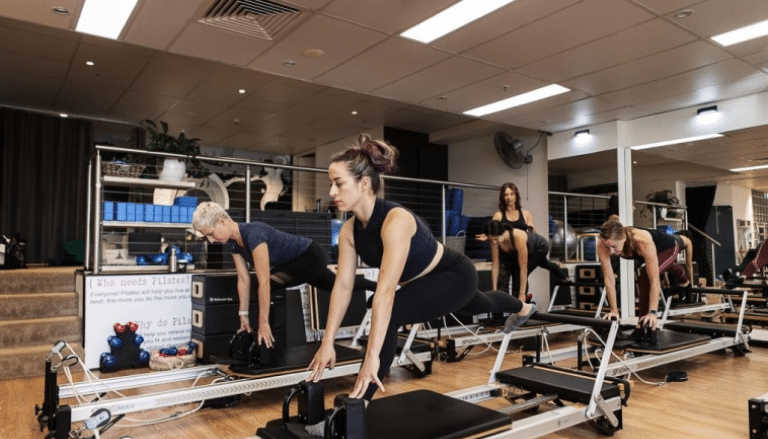
ToggleReformer Pilates is widely valued for building functional strength, improving posture, and supporting flexibility, all within a single low-impact session. The reformer’s adjustable spring resistance challenges muscles through a full range of motion, while its guided, controlled movements encourage better alignment and body awareness over time. Pilates360 offers small group Reformer Pilates classes in Neutral Bay and St Leonards studios on Sydney’s Lower North Shore.
Quick Answer
Reformer Pilates offers three core benefits: strength, through adjustable spring resistance that challenges muscles across a full range of motion; posture, through controlled, alignment-focused movement; and flexibility, through supported stretches using the reformer’s straps and carriage. Together, these make it a well-rounded, low-impact option for developing strength, mobility and body control.
Reformer Pilates: Key Information
| Category | Details |
| Definition | Pilates performed on a spring-loaded reformer machine, offering adjustable resistance |
| Main Benefits | Strength, posture, flexibility, balance, and muscle tone |
| Suitable For | Beginners through to advanced participants, adjusted by resistance and exercise selection |
| Duration | Typically 45–55 minute sessions |
| Difficulty | Adjustable from beginner-friendly to advanced |
| Equipment Used | Reformer machine with adjustable spring resistance |
| Location | Neutral Bay and St Leonards, Sydney’s Lower North Shore |
Is Reformer Pilates Suitable for Beginners?
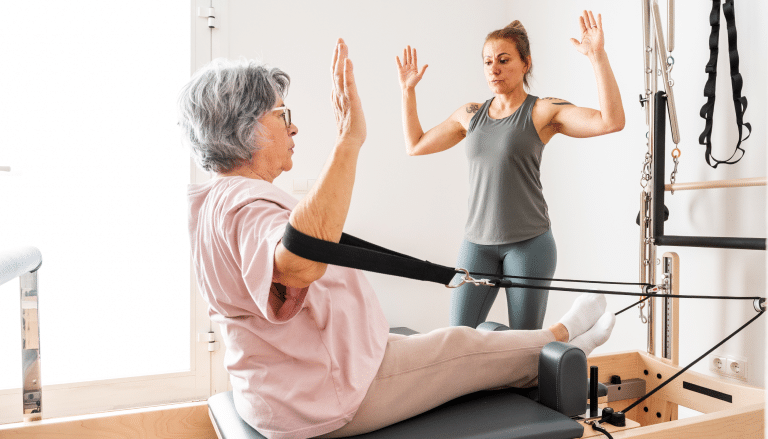
Yes. Reformer Pilates can be suitable for beginners because the resistance can be adjusted and exercises can be modified according to experience and ability. The guided nature of the reformer also gives instructors opportunities to help participants understand movement, positioning and technique.
Starting with a beginner-level class can help you become familiar with the equipment and fundamental Pilates movements before progressing to more challenging exercises.
Why the Reformer Is Effective for Strength, Posture and Flexibility
The reformer’s design a sliding carriage connected to a set of adjustable springs is what sets it apart from many other forms of exercise. Because resistance can be increased or decreased, the same exercise can suit a complete beginner or a more experienced participant. The guided movement of the carriage also encourages controlled, aligned movement rather than momentum-driven repetitions.
That combination of adjustable resistance and controlled movement is one reason the reformer can support a broad range of fitness goals.
Reformer Pilates for Strength
How Does Reformer Pilates Build Strength?
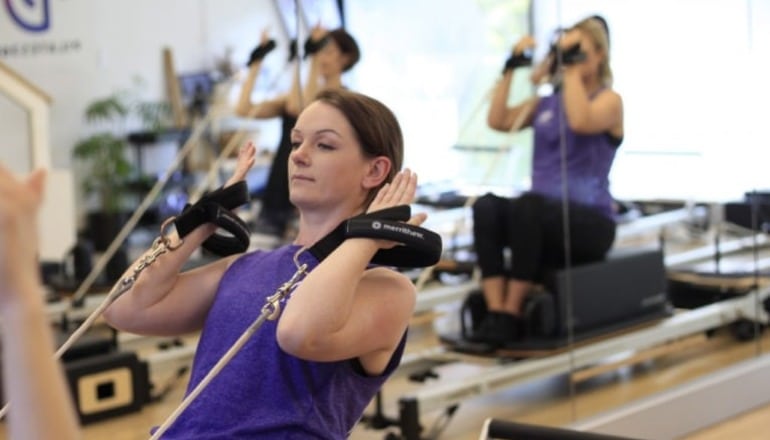
Reformer Pilates builds strength by using the machine’s spring resistance to challenge muscles through slow, controlled movements, engaging the core, legs, arms, and back within a single session. Because resistance is adjustable, exercises can be made more or less challenging without changing the movement pattern itself, allowing participants to progress gradually.
Is Reformer Pilates Strength Training?
Yes, in many respects. Reformer Pilates uses external resistance from the springs to challenge muscles, which follows the same basic principle as traditional strength training. The key difference is the emphasis: reformer work prioritises control, alignment, and core engagement over maximal load, making it a form of low-impact, functional strength training rather than heavy resistance training.
Reformer Pilates for Posture
How Does Reformer Pilates Improve Posture?
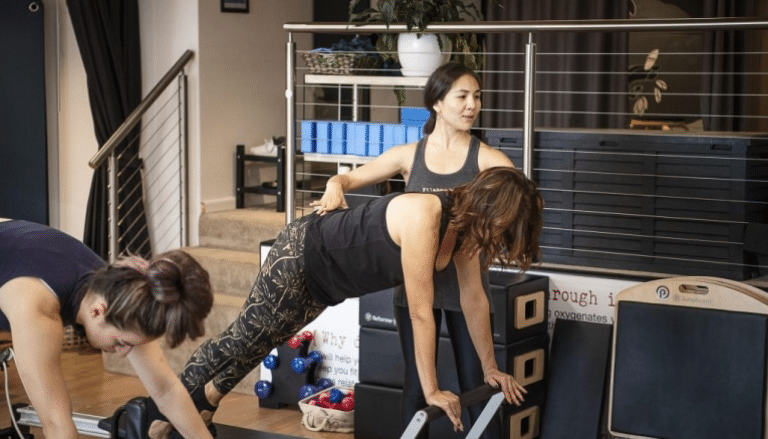
Reformer Pilates can support posture by strengthening the deep core and postural muscles that help maintain spinal alignment, while the guided nature of the exercises encourages greater awareness of body position throughout each movement. Over time, this awareness may also carry into everyday activities such as sitting, standing, and walking.
Common postural focus areas in a reformer class include:
- Strengthening the deep abdominal and back muscles that support the spine
- Improving shoulder and upper back alignment
- Building pelvic stability, which supports posture from the ground up
- Encouraging awareness of alignment during everyday movement, not just during class
Reformer Pilates for Flexibility
Reformer Stretch: Supported Flexibility Work
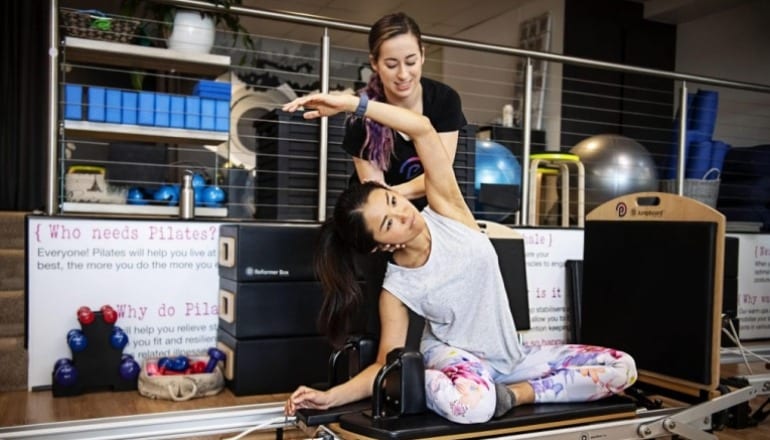
Reformer stretch exercises use the machine’s straps and sliding carriage to support the body through a gentle, extended range of motion. Because the equipment provides support, certain stretches can feel more accessible on the reformer than they would unsupported, which is why stretching exercises are often included as part of a session’s cool-down.
Flexibility benefits commonly associated with regular reformer practice include:
- Improved range of motion through the hips, hamstrings, and spine
- Greater ease of movement in everyday activities
- Reduced everyday stiffness, particularly for those who sit for long periods
Key Benefits of Reformer Pilates
| Benefit | What It May Involve |
| Strength | Full-body muscle engagement using adjustable spring resistance |
| Posture | Core and postural muscle strengthening, plus alignment awareness |
| Flexibility | Supported stretching through the reformer’s straps and carriage |
| Balance | Controlled, slow movement sequences that challenge stability |
| Muscle tone | Consistent, full-range resistance work across major muscle groups |
| Low impact | Reduced strain on joints compared to some higher-impact workouts |
Other Benefits People Often Ask About
Can Reformer Pilates Help with Back Pain?
Reformer Pilates may help support people managing general back discomfort by strengthening the core and encouraging better movement patterns, though it should be used alongside, not instead of, professional medical advice. The adjustable resistance allows instructors to modify exercises to suit your current comfort level, and it’s important to let your instructor know about any back pain or injury before your first class.
Can Reformer Pilates Support Weight Loss?
Reformer Pilates can be a useful addition to an overall active lifestyle, and some people find it supports their broader fitness and weight management goals when combined with a balanced diet and other forms of movement. It shouldn’t be relied on as a standalone or guaranteed weight loss method, and individual results will vary.
Who Benefits Most from Reformer Pilates?
- Beginners wanting a guided introduction to strength, posture, and flexibility work in one class
- Busy professionals managing desk-related posture and stiffness
- Adults returning to exercise after a break, looking for a low-impact way to rebuild strength
- More experienced participants ready for an advanced Pilates reformer workout with greater resistance and complexity
- Anyone wanting a private Pilates class for more individualised attention while working on specific fitness or movement goals
Progressing Your Practice: From Beginner to Advanced
As your strength, control, and confidence develop, many people progress from beginner Reformer Pilates classes into more challenging formats. The reformer jumpboard, for example, is a popular attachment that adds a cardio, jumping-based element and can be used to build lower-body strength and stamina in a low-impact setting once the fundamentals feel comfortable.
For a full breakdown of how to start and progress through reformer class levels, see our companion guide, How to Start Reformer Pilates: Beginner’s Guide, Benefits & First Class Tips.
Small Group vs Private Reformer Pilates
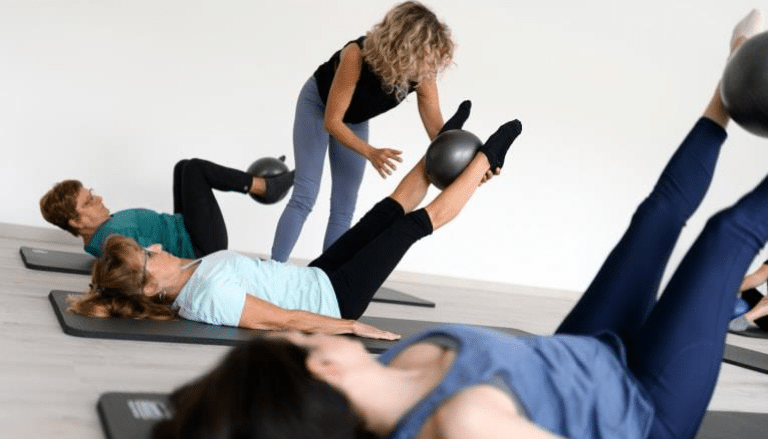
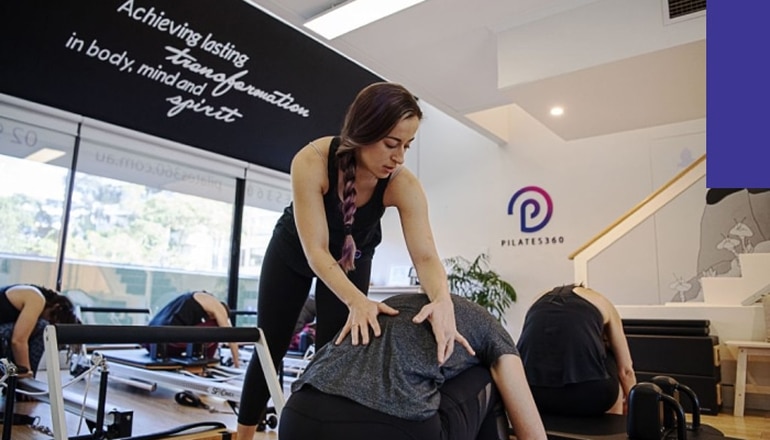
Both small group and Private Reformer Pilates classes can provide opportunities to work on strength, posture, flexibility and movement control. Small group Reformer Pilates classes, such as those at Pilates360, offer a supportive, social setting with instructor guidance shared across a capped group size. A Private Pilates class offers more individualised attention, which can be particularly useful for beginners, those managing an injury, or anyone wanting a more tailored session.
Why Choose Pilates360 for Reformer Pilates?
Pilates360 has been helping people move well on Sydney’s Lower North Shore since 2015, with small group Reformer Pilates classes capped at a maximum of 9 people so instructors can give genuine, individual attention to each person’s movement and fitness goals. With 170+ Google reviews and studios in both Neutral Bay and St Leonards, Pilates360 offers an established option for locals searching for Reformer Pilates near them, along with membership and class package options for those wanting to build consistency over time.
Common Mistakes That Can Limit Progress
- Skipping consistency – strength, mobility, and movement control develop gradually with regular practice, not a single class.
- Not communicating goals to your instructor – sharing what you want to work on helps them tailor your session.
- Rushing through movements – the reformer’s benefits come largely from control, not speed.
- Avoiding the stretch component – skipping the cool-down means missing an opportunity to work on flexibility.
Pro Tips for Getting the Most from Reformer Pilates
- Attend consistently even one to two sessions a week can help you build familiarity and consistency over time.
- Ask your instructor about postural cues specific to your goals, especially if you sit for long periods at work.
- Don’t skip the stretch-focused exercises at the end of class.
- Consider a Reformer Pilates membership if you’re aiming for consistent, long-term practice rather than occasional sessions.
People Also Ask
Does Reformer Pilates really build strength?
Yes, Reformer Pilates builds strength by using adjustable spring resistance to challenge muscles through a full range of motion, engaging the core, arms, legs, and back in a single session.
How long does it take to see benefits from Reformer Pilates?
This varies by individual, but consistent practice can help develop improvements in areas such as strength, movement control and body awareness over time.
Is Reformer Pilates better than Mat Pilates for strength?
Both offer genuine strength benefits; Reformer Pilates uses adjustable spring resistance, while Mat Pilates relies primarily on bodyweight, so the right choice often comes down to personal preference and goals.
Frequently Asked Questions
What are the main benefits of Reformer Pilates?
Reformer Pilates is commonly associated with improved strength, posture, flexibility, balance, muscle tone, and low-impact full-body conditioning.
Is Reformer Pilates good for posture?
Yes, Reformer Pilates can support posture by strengthening the deep core and postural muscles while encouraging alignment awareness throughout each movement.
Does Reformer Pilates improve flexibility?
Reformer Pilates can support flexibility through assisted, reformer-based stretches that use the machine’s straps and carriage to gently extend range of motion.
Is Reformer Pilates suitable for back pain?
Reformer Pilates may help support people managing general back discomfort by strengthening the core, though it’s best used alongside professional medical advice for any diagnosed condition.
Is Reformer Pilates considered strength training?
Reformer Pilates shares similarities with strength training, as it uses spring-based resistance to challenge muscles, though it prioritises control and alignment over maximal load.
Where can I find small group Reformer Pilates classes near me?
Pilates360 offers small group Reformer Pilates classes in St Leonards and Neutral Bay studios, both on Sydney’s Lower North Shore.
Is a Reformer Pilates membership worth it for building these benefits?
For people wanting consistent practice, a membership can offer better value and encourage the regular attendance needed to develop and maintain progress.
Key Takeaways
- Reformer Pilates can support strength, posture, flexibility, balance and overall movement control.
- Strength comes from the reformer’s adjustable spring resistance, which challenges muscles through a full range of motion.
- Posture benefits from core and postural muscle strengthening combined with alignment-focused movement.
- Flexibility can be supported through reformer-based stretching using the machine’s straps and carriage.
- Progress develops with consistency, making regular attendance important for those wanting to build their practice.
- Pilates360 offers small group Reformer Pilates classes across its Neutral Bay and St Leonards studios on Sydney’s Lower North Shore.
Final Thoughts
Strength, posture, and flexibility don’t have to be separate goals when it comes to Reformer Pilates. They can develop together as the body adapts to controlled, full-range movement against adjustable resistance. Whether you’re brand new to the reformer or working toward a more advanced practice, the exercises can be adapted to different experience levels.
At Pilates360, small group classes across Neutral Bay and St Leonards mean instructors can provide guidance while helping participants work towards their individual movement and fitness goals.
Explore Reformer Pilates classes at Pilates360, view the timetable, or get in touch with the team to find the right class for your goals.