Table of Contents
ToggleSmall group Pilates is a class with a limited number of people, so the instructor can watch your technique and adjust exercises for you in a more social and usually more affordable setting than a private session. At Pilates360, small group classes are capped at 9 people. It suits beginners, adults returning to exercise, and anyone who wants guidance without one-on-one pricing. This guide explains how small group Pilates compares with private sessions, what classes you can try, when and how to start, and what to expect on day one. Pilates360 runs small group Pilates at St Leonards and Neutral Bay studios on Sydney’s Lower North Shore, and has been helping people move well since 2015.
What Is Small Group Pilates?
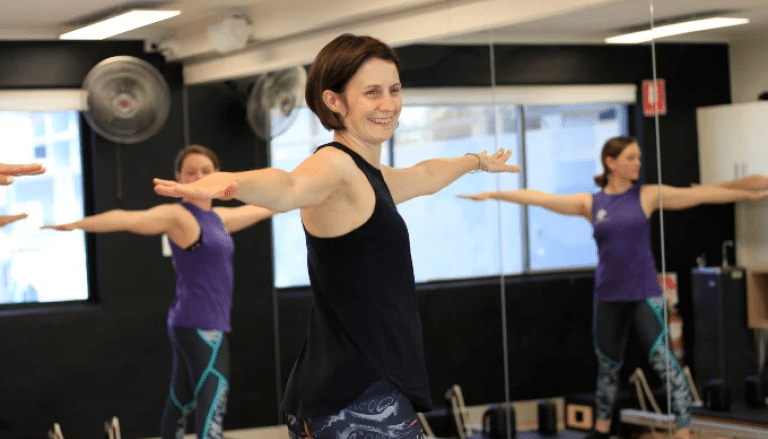
Small group Pilates is a Pilates class capped at a small number of participants, so each person gets more individual attention than in a large class. The instructor leads the group through the same sequence while correcting form and offering modifications to individuals.
| Small group class | Studio Pilates (private or duet) | Private session | |
| Group size | Capped at 9 | One or two people | One person |
| Attention | Shared, with individual corrections | High | Full attention from the instructor |
| Equipment | Depends on the class (reformer, mat, barre) | Range of studio equipment, including the reformer | All studio equipment, or the reformer only |
| Best for | Beginners and regulars wanting guidance and community | Learning in a smaller setting, or more specialised work | Learning the basics, injury recovery with clearance, or a tailored plan |
| Booking | Timetable | Email the studio | Email the studio |
Benefits of Small Group Pilates
- More individual attention. With a capped class, the instructor can see your technique and offer corrections, which is harder in a large room.
- Safer learning. An instructor who can see everyone can spot and adjust movements early, which helps when you are learning the equipment.
- Modifications built in. Exercises can be adjusted for injuries, pregnancy, or low confidence, as long as you tell your instructor beforehand.
- Community and consistency. Seeing familiar faces and having a regular class time makes it easier to keep turning up, and consistency is what builds results over time.
- Better value than private. Small group classes typically cost less per session than one-on-one sessions.
- A welcoming setting for beginners. A smaller room is often less intimidating than a big class or a gym floor.
Small Group Pilates Classes You Can Try
The timetable covers a range of class types. Each one below is described as it appears on the studio’s website.
- Reformer Basics: learn the basics, with a focus on core strength and flexibility; suitable for most clients.
- Open Level Reformer: intermediate exercises to refine form and technique, for students with some experience.
- Reformer Workout: a full-body workout covering strength, endurance and flexibility.
- Reformer Fit: fast-paced and dynamic, to build endurance and fitness.
- Reformer Advanced: complex movements for experienced students.
- Stretch and Strengthen: combines stretching and strengthening, for all levels.
- Mobility and Flexibility: works on range of motion and flexibility, for all levels.
- Reformer Jumpboard: a fun, challenging class that builds strength, fitness and coordination.
- Mat Pilates: floor-based classes using your body weight.
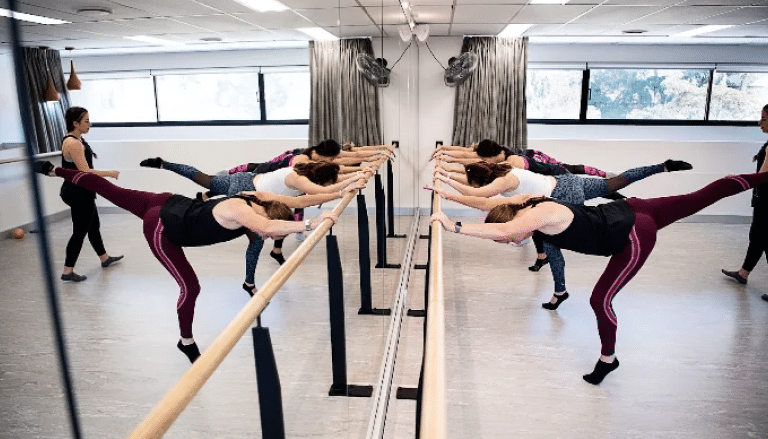
- Barre: Pilates-style core work combined with small, ballet-inspired movements.
- Pre & Post Natal: classes adapted for pregnancy and recovery, once cleared by your doctor.
If you are new, Reformer Basics or Mat Pilates are the usual starting points. For a full comparison, see our guides to Mat Pilates and Reformer Pilates for beginners.
When to Start Small Group Pilates
You can start small group Pilates whenever you feel ready, and you do not need to be fit or flexible first. Most people begin in a beginner-level class and build from there.
Two situations are worth a pause. If you are recovering from an injury or surgery, are pregnant, or have a health condition, speak with your doctor or physiotherapist first and tell your instructor. And if you are very nervous, or have never used a reformer, you may prefer to begin with a private session. The studio’s website notes that a private session can help you learn the basics before moving into group classes.
Where to Start Pilates: Your First Small Group Class, Step by Step
If you are asking where to start Pilates, the answer is a beginner-level class in a small group, or a private session first if you want one-on-one guidance.
- Choose your starting format. Mat Pilates or Reformer Basics suit most newcomers.
- Check the timetable and pick a time you can realistically repeat each week.
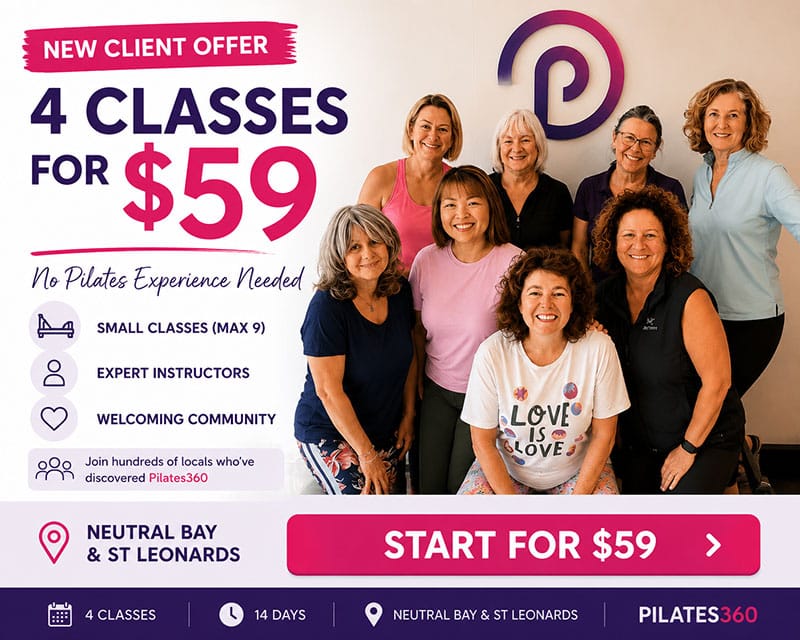
- Look at the pricing options. The pricing pages list single session passes, class packages, memberships and a new client offer, so you can try a class before committing to anything long-term. Confirm current terms with the studio.
- Tell the studio about injuries or pregnancy when you book, not partway through class.
- Arrive 10 to 15 minutes early in close-fitting activewear, with grip socks for reformer classes.
- Plan your first few weeks. Booking two or three classes close together helps the movements feel familiar sooner.
Can a small group Pilates class work for complete beginners?
Yes, as long as you choose a beginner-level class. Instructors in a small group can slow down, demonstrate and adjust for newcomers, and you can say if an exercise does not feel right.
Private Reformer Pilates Class: When It Makes Sense
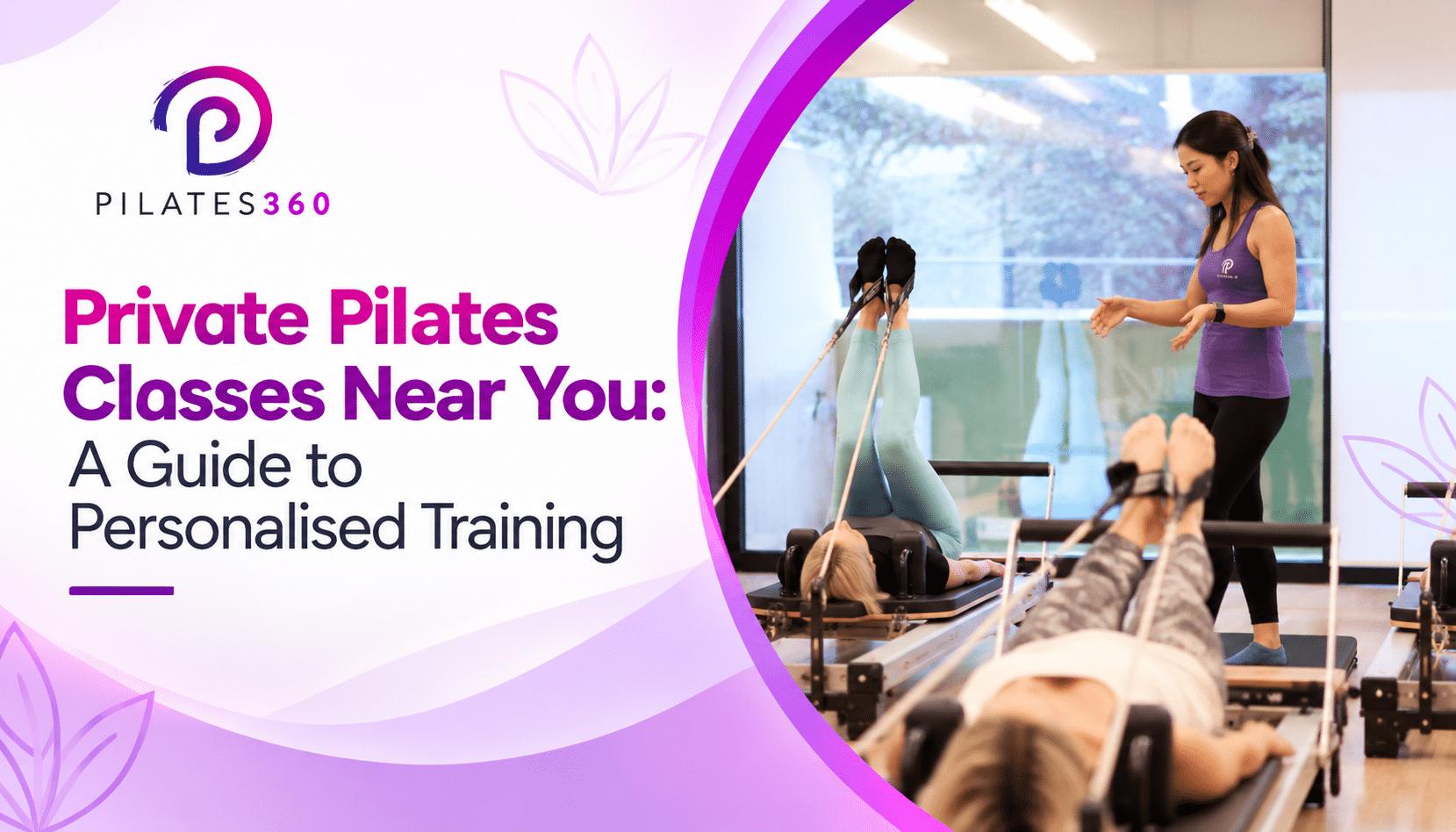
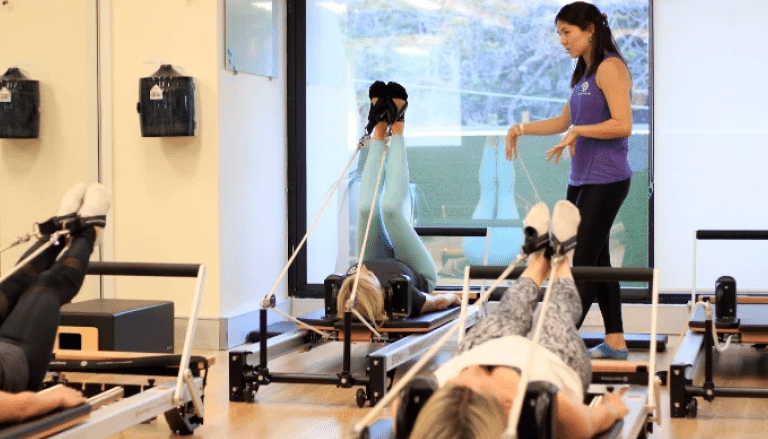
A private reformer Pilates class gives you the instructor’s full attention. The studio offers private sessions that use only the reformer, as well as sessions that use all of its equipment. It is a sensible option if you want to learn the basics before joining a group, are returning to movement after injury (with clearance from your health professional), or are working towards more advanced exercises. Many people start privately and then move into small group classes once they feel confident.
What to Expect in Your First Small Group Class
You will usually be greeted and asked about your experience and any injuries. The instructor then leads a warm-up, demonstrates each exercise, and moves around the room correcting and adjusting as the class goes on. Classes commonly run 45 to 55 minutes, so check the timetable for the length of each one. Reformer classes use the reformer, mat classes use a mat and sometimes small props, and barre classes use a barre for support.
Can you modify exercises in a group class? Yes. Tell the instructor about any injury, pregnancy or discomfort, and they can offer an alternative so you are not left trying to keep up.
Why Choose Pilates360 for Small Group Pilates
Pilates360 has been running small group Pilates on Sydney’s Lower North Shore since 2015, with classes capped at 9 people. New starters get a personal welcome call and guidance choosing the right class, and the studio has 170+ Google reviews. It is a registered member of the Pilates Alliance Australasia, the peak professional body for Pilates instructors and studios in Australia.
- Neutral Bay: Unit 2A/211 Ben Boyd Road, about 2 minutes from the Big Bear bus stop, with free parking at Big Bear shopping centre and a 2 minute walk.
- St Leonards: 45 Chandos Street, 5 minutes from the train station, with free parking at 88 Christie Street and a 5 minute walk.
Frequently Asked Questions
What is small group Pilates?
Small group Pilates is a class capped at a small number of people, so the instructor can give individual corrections and modifications while leading the group. It sits between a large class and a private session.
How many people are in a small group Pilates class at Pilates360?
Small group classes at Pilates360 are capped at 9 people, so instructors can adjust exercises for each person. Check the timetable for details of individual classes.
Is small group Pilates better than a private Pilates class?
Neither is better for everyone. Small group classes offer individual attention at a lower cost per session, while a private reformer class gives the instructor’s full attention, which suits learning the basics or working around an injury.
How do I start small group Pilates?
Choose a beginner-level class such as Reformer Basics or Mat Pilates, check the timetable, tell the studio about any injuries, and book. A private session first is an option if you want extra guidance.
When is the right time to start small group Pilates?
Whenever you feel ready, as you do not need to be fit or flexible first. If you are recovering from injury or surgery, or are pregnant, speak with your doctor or physiotherapist before you start.
Can I try a Pilates class before committing to a membership?
Yes, Pilates360’s pricing pages list single session passes, class packages and a new client offer alongside memberships. Check the pricing page for current details before you book.
Where can I find small group Pilates in Neutral Bay or St Leonards?
Pilates360 runs small group Pilates at its Neutral Bay and St Leonards studios, with classes capped at 9 people. See the timetable or contact the team to choose your first class.
Final Thoughts
Small group Pilates gives you guidance, modifications and a community without the price of private sessions, which is why it is such a common place to start. Choose a beginner class, tell your instructor about your body and goals, and give it a few weeks.
View the Pilates360 timetable, check the pricing options, or get in touch with the team about small group Pilates at the Neutral Bay and St Leonards studios.