Table of Contents
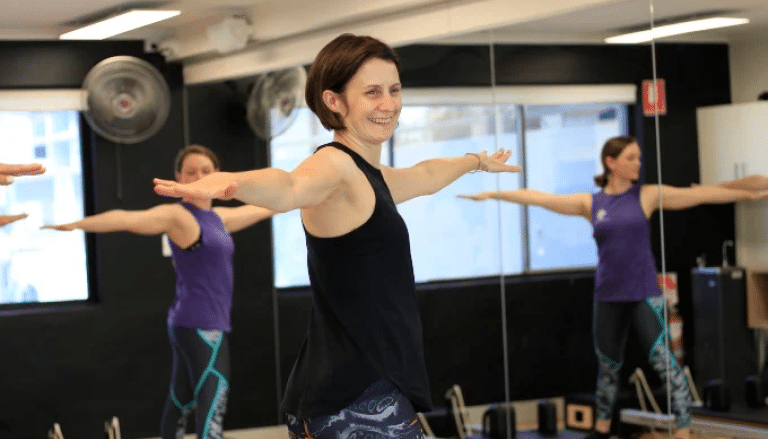
ToggleStarting Reformer Pilates is straightforward: book into a beginner-level class such as Reformer Basics, let your instructor know you’re new, wear grip socks and close-fitting activewear, and expect a class that introduces the machine and its movements at a manageable pace. No prior Pilates experience is needed. Small group Reformer Pilates classes at Pilates360 in Neutral Bay and St Leonards are designed with complete beginners in mind.
Quick Answer
Reformer Pilates is a form of Pilates performed on a spring-loaded machine called a reformer, which provides adjustable resistance for a full-body, low-impact workout. To start, book a beginner-friendly class, tell your instructor you’re new, and expect guided instruction on the machine’s basics. Reformer Pilates is commonly used to build core strength, improve flexibility, and support posture, and can be adapted for beginners, back pain, or general fitness goals.
What Is Reformer Pilates?
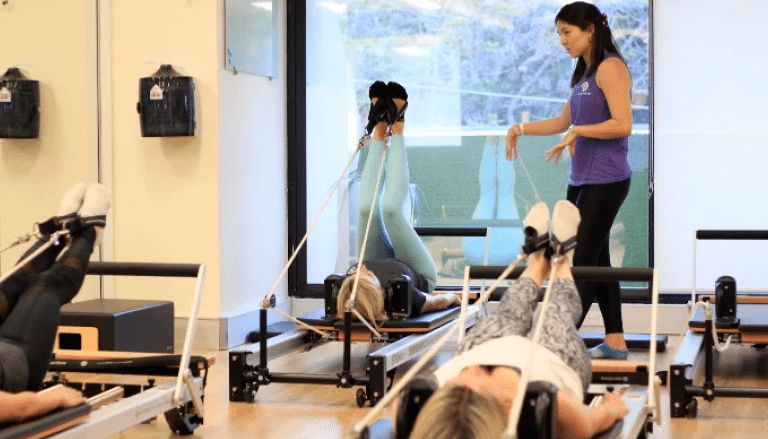
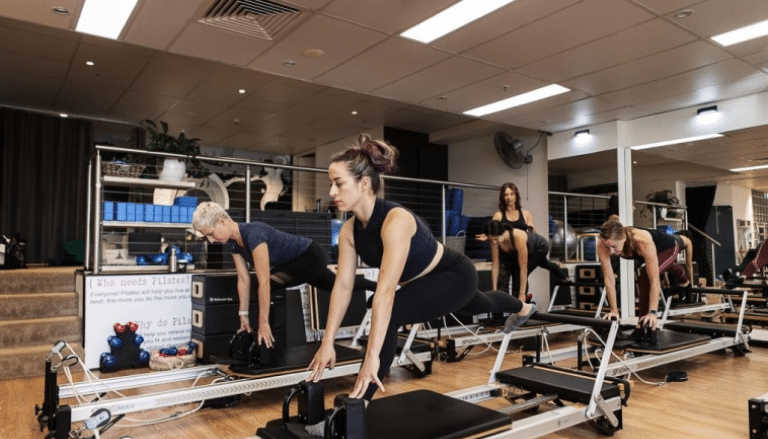
Reformer Pilates is practised on a reformer – a bed-like machine with a sliding carriage, adjustable springs, straps, and a footbar. The springs create resistance that can be adjusted to suit your strength and experience level, making the reformer a versatile piece of equipment for building strength, flexibility, and control through a full range of motion.
Unlike Mat Pilates, which relies purely on bodyweight, the reformer’s adjustable resistance means exercises can be made easier or more challenging without changing the movement itself which is part of why it suits such a wide range of fitness levels.
Why Choose Pilates360 for Reformer Pilates?
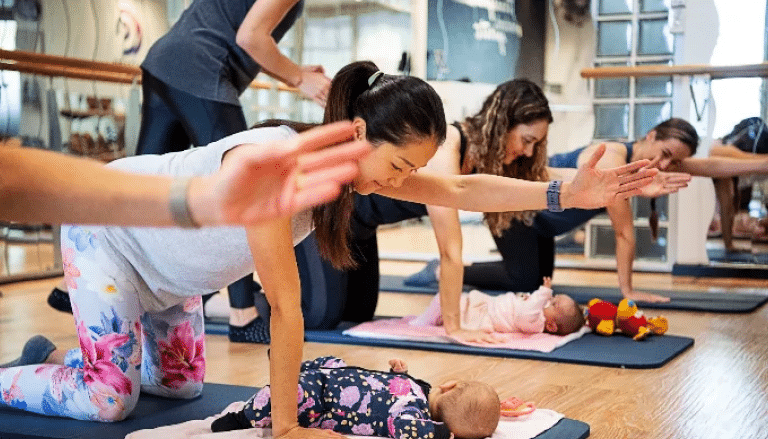
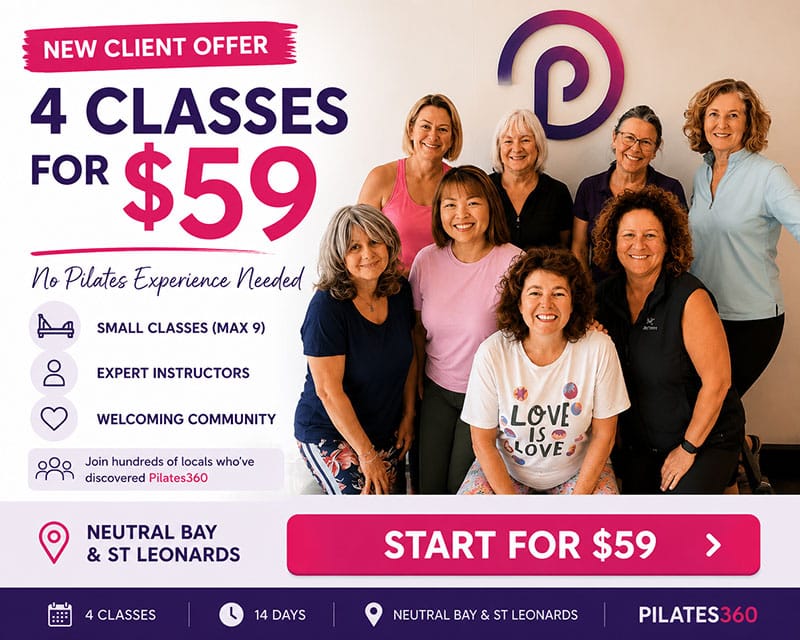
Pilates360 has been helping people move well on Sydney’s Lower North Shore since 2015, with small group Reformer Pilates classes capped at a maximum of 9 people so instructors can give genuine, individual attention throughout each session. With 170+ Google reviews and studios in both Neutral Bay and St Leonards, Pilates360 offers a well-established option for locals searching for Reformer Pilates near them including a personal welcome call and guidance choosing the right class for total beginners.
Benefits of Reformer Pilates
While individual results vary, Reformer Pilates is commonly associated with the following benefits.
| Benefit | What It May Involve |
| Core strength | Building stability through the abdominals, back, and pelvic floor using adjustable resistance |
| Flexibility | Working through a fuller range of motion, supported by the reformer’s straps and carriage |
| Better posture | Encouraging alignment habits through controlled, full-body movement |
| Muscle tone | Building strength across major muscle groups with adjustable spring resistance |
| Balance and coordination | Supporting stability through slow, controlled sequences |
| Low impact | Placing less strain on joints compared to some higher-impact workouts |
Is Reformer Pilates Strength Training?
Yes, in many respects. Reformer Pilates uses spring-based resistance to challenge muscles through a full range of motion, which shares similarities with traditional strength training. It differs in that the focus stays on control, alignment, and core engagement rather than maximal load, so it’s often described as a form of low-impact, functional strength training rather than heavy resistance training.
How to Start Reformer Pilates: A Step-by-Step Guide
- Choose a beginner-friendly class — look for an entry-level option such as Reformer Basics, designed specifically for people new to the reformer.
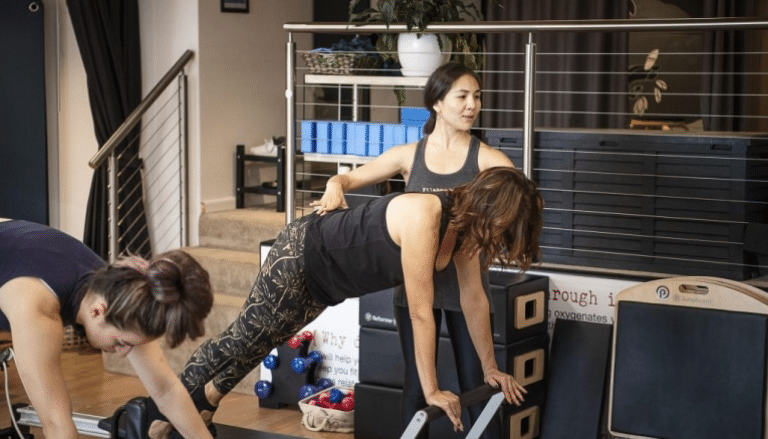
- Let your instructor know you’re new — this helps them introduce the machine, explain the springs and straps, and set an appropriate pace.
- Wear the right gear — close-fitting activewear and grip socks are commonly required for safety on the reformer.
- Arrive a little early — this gives you time to get comfortable with the studio and equipment before class starts.
- Focus on learning the machine first — in your first few classes, prioritise understanding the movements over intensity.
- Ask questions — a good instructor will welcome questions about the equipment, exercises, or modifications.
- Progress at your own pace — as you build confidence, you can move into more challenging class formats.
Reformer Pilates Class Levels: Finding Your Starting Point
Reformer Pilates classes are generally structured in levels, so you can progress as your strength, confidence, and experience grow.
| Class Level | Best For |
| Reformer Basics | Complete beginners learning the machine and foundational movements |
| Open Level Reformer | Mixed-ability classes suited to beginners and more experienced participants together |
| Reformer Workout | Building strength and endurance once you’re comfortable with the basics |
| Reformer Fit | A more dynamic, fitness-focused reformer class |
| Reformer Advanced | Experienced participants wanting a more challenging advanced Pilates reformer workout |
| Reformer Jumpboard | An added-resistance, cardio-style attachment for building strength and stamina |
Who Should Try Reformer Pilates?
Good Candidates for Reformer Pilates Include:
- Complete beginners wanting a guided, low-impact introduction to strength and mobility work
- Adults returning to exercise after a break
- People wanting a full-body workout without high-impact movement
- Anyone wanting to build core strength, flexibility, and muscle tone
- Experienced Pilates participants ready to progress to an advanced Pilates reformer workout
Is Reformer Pilates Good for Back Pain?
Reformer Pilates may help support people managing general back discomfort by building core strength and encouraging better movement patterns, though it should be considered alongside, not instead of, professional medical advice. The adjustable resistance of the reformer allows instructors to modify exercises to suit your current comfort level, and it’s important to let your instructor know about any back pain or injury before your first class.
Can Reformer Pilates Support Weight Loss Goals?
Reformer Pilates can be a useful addition to an overall active lifestyle, and some people find it supports their broader fitness and weight management goals when combined with a balanced diet and other forms of movement. It shouldn’t be relied on as a standalone or guaranteed weight loss method, and individual results will vary.
Reformer Stretch: Using the Reformer for Flexibility
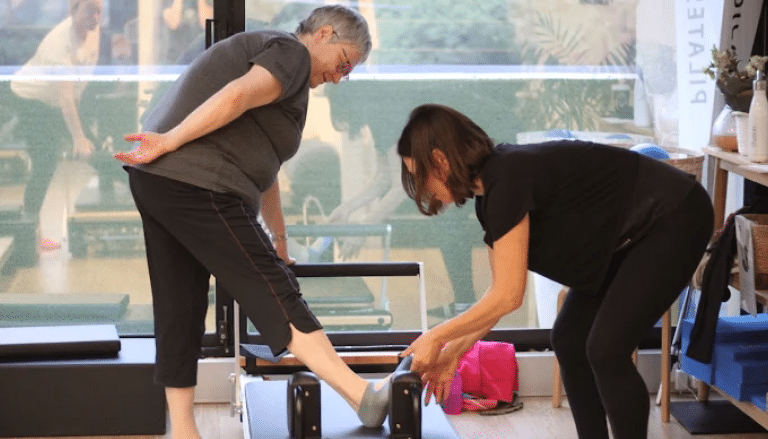
Beyond strength work, the reformer is also commonly used for assisted stretching. Reformer stretch exercises use the machine’s straps and carriage to support the body through a gentle, extended range of motion, which can make certain stretches feel more accessible than stretching without support. Stretching Pilates reformer exercises are often included at the end of a class as part of the cool-down, helping to ease muscles worked during the session.
What to Expect at Your First Class
Your first Reformer Pilates class is generally structured to help you feel comfortable, not overwhelmed.
- A brief introduction to the reformer, its parts, and basic safety points
- A gentle warm-up to prepare your body for movement
- A guided sequence of foundational exercises, adjusted to your comfort level
- Ongoing modifications from your instructor throughout the class
- A cool-down and stretch to finish
Common Mistakes to Avoid
- Choosing an advanced class as a first session starting with Reformer Basics or Open Level Reformer sets you up for a better experience.
- Not mentioning an injury or condition instructors can only modify a class properly with full information.
- Comparing your pace to others in the class everyone progresses differently on the reformer.
- Skipping the warm-up or cool-down both play an important role in getting the most from your session.
Pro Tips
- Book a private Pilates class first if you’d prefer one-on-one guidance before joining a small group setting.
- Bring grip socks and comfortable, close-fitting activewear.
- Ask about reformer pilates membership options if you’re planning to attend regularly.
- Give yourself a few classes before judging how the reformer feels — it often takes a session or two to get used to the equipment.
Reformer Pilates Membership and Class Options
Reformer Pilates is generally available as single sessions, class packages, or an ongoing membership, giving you flexibility depending on how often you plan to attend. If you’re just starting out, a short class package is a good way to build confidence with the machine before committing to a longer-term reformer pilates membership. Private Pilates classes are also available for anyone wanting one-on-one instruction, particularly useful for beginners or those managing an injury.
Frequently Asked Questions
1. What is Reformer Pilates?
Reformer Pilates is a low-impact, full-body workout performed on a spring-loaded reformer machine. It improves strength, flexibility, posture, balance, and core stability through controlled movements.
2. Is Reformer Pilates good for beginners?
Yes. Reformer Pilates is suitable for beginners because the machine’s spring resistance can be adjusted to match different fitness levels. Beginner classes help you learn proper technique safely.
3. How do I start Reformer Pilates as a complete beginner?
Start by booking a beginner-friendly Reformer Pilates class and let your instructor know you’re new. They’ll guide you through the equipment, correct technique, and safe movement patterns.
4. How is Reformer Pilates different from Mat Pilates?
Reformer Pilates uses a machine with adjustable spring resistance, while Mat Pilates relies mainly on body weight. The reformer provides more exercise variations and adjustable support or resistance.
5. Is Reformer Pilates a full-body workout?
Yes. A typical Reformer Pilates class targets the core, legs, glutes, arms, back, and shoulders, providing a balanced full-body workout with low impact on the joints.
6. Can I do a private Pilates class instead of a group class?
Yes. Private Pilates sessions provide one-on-one instruction and are ideal for beginners, injury rehabilitation, or anyone wanting a personalised training experience.
7. How many people are in a small group Reformer Pilates class?
Pilates360 keeps Reformer Pilates classes small, with a maximum of 9 participants, allowing instructors to provide more personalised guidance and technique correction throughout each session.
Key Takeaways
- Reformer Pilates uses a spring-loaded machine to provide adjustable, full-body resistance training.
- Starting is straightforward: book a beginner-friendly class, let your instructor know you’re new, and focus on learning the machine first.
- Common benefits may include improved core strength, flexibility, posture, and muscle tone.
- It can be adapted for back pain, general fitness, or weight management goals, alongside professional medical advice where relevant.
- Classes are generally structured in levels, from Reformer Basics through to Reformer Advanced and Jumpboard.
- Pilates360 offers small group Reformer Pilates classes at St Leonards and Neutral Bay studios on Sydney’s Lower North Shore.
Final Thoughts
Starting Reformer Pilates doesn’t need to be intimidating. With the right beginner-friendly class, clear instructor guidance, and a bit of patience while you get used to the machine, most people find their confidence builds quickly. Whether your goal is core strength, flexibility, or simply a low-impact way to move well, Reformer Pilates offers a versatile starting point that can grow with you.
At Pilates360, small group classes across Neutral Bay and St Leonards mean instructors can get to know your goals and guide you through every step, from your very first class onward.
Explore Reformer Pilates classes at Pilates360, view the timetable, or get in touch with the team to book your first class.